Essential Oil Dilution Ratios: IFPA Safe Concentrations for Every Application
IFPA-verified dilution ratios for every application—face oils, body oils, baths, diffusers. Professional safety standards for daily and therapeutic use.

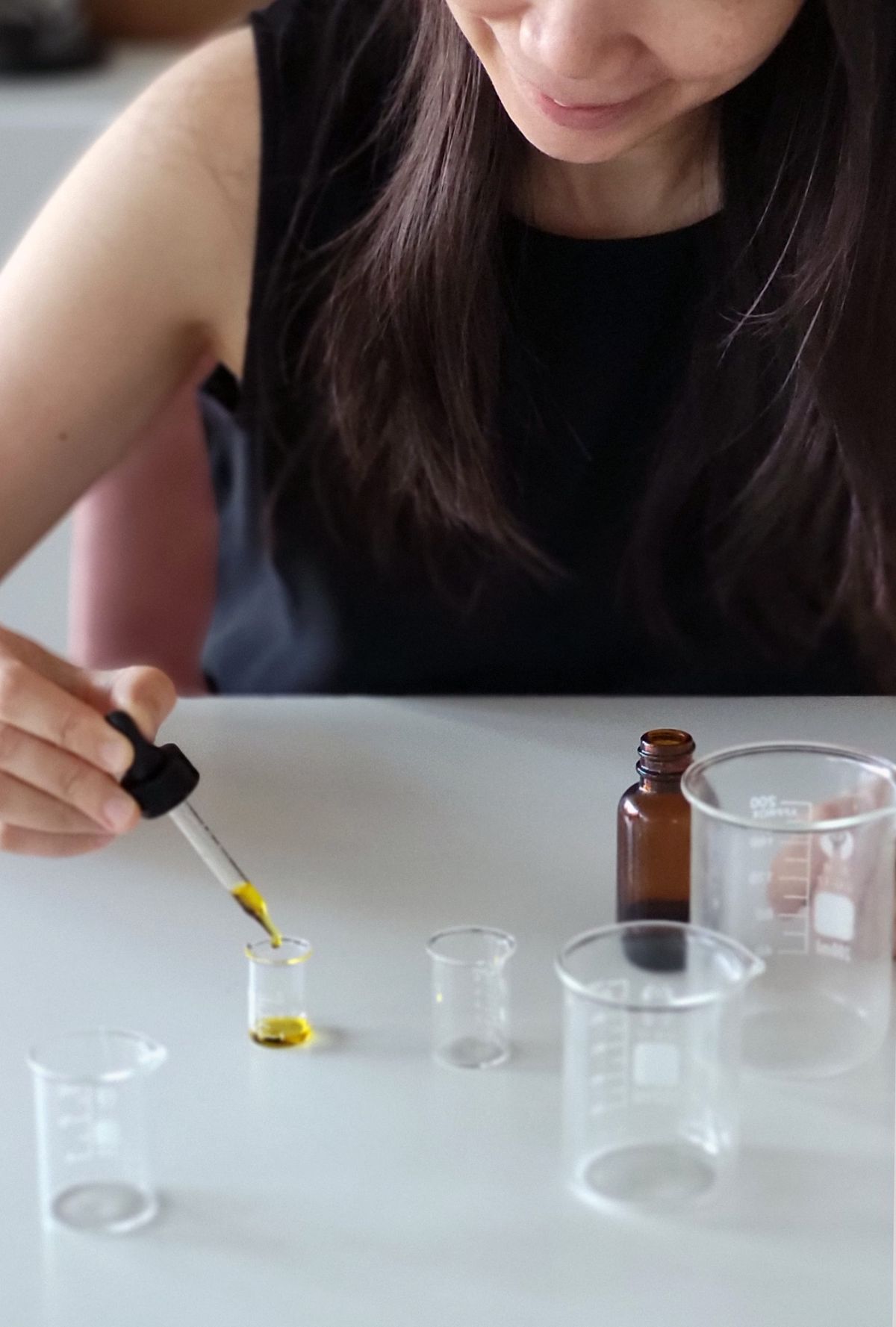
Every drop of essential oil is highly concentrated. Applying undiluted oils to your skincan cause sensitization, nausea, or dizziness—the opposite of what you're trying to achieve. As an mIFPA certified aromatherapist, I follow the International Federation of Professional Aromatherapists safety standards for all dilution ratios. This guide provides the exact, professionally verified concentrations for every application: face oils, body oils, baths, diffusers, room sprays, and more. Whether you're making a daily wellness blend or addressing an acute condition, you'll find the safe concentration you need.
Why Dilution Matters
It takes a significant quantity of plant material to produce a small bottle of essential oil. The “cure-all” essential oil - Lavender - requires 1 to 2 kilograms of distilled lavender flowering tops to fill a 10mL bottle. Every drop contains a lavender garden. Every drop is precious.
Because it is highly concentrated, all essential oils — with the exception of lavender and tea tree — must be diluted in a carrier oil or another medium before they come into contact with the skin.
For guidance on which carrier oil suits your skin type, see the Carrier Oil Guide.
Aromatherapy rests on the understanding that body, mind, and spirit are inseparable. When a practice can be woven into the rhythms of daily life — something that is genuinely enjoyable rather than effortful — its effects go further. An oil applied with pleasure, in a moment of genuine care, reaches further than one applied as a clinical obligation. For this reason, essential oils can be incorporated into a carrier oil, a body lotion, a shampoo, a bath, a foot soak, a diffusion, a room spray, a perfume, or a lip balm — whatever fits most naturally into how a person already lives.
Standard Dilution Ratios for Daily & Therapeutic Use
The right dilution depends on many factors: age, height, weight, application method, the nature of the condition, health history, and particular circumstances such as pregnancy or post-operative recovery. Children and adults require different amounts. Acute conditions and chronic ones call for different concentrations. What follows are the general standards for everyday wellness use.
1% Concentration: Daily Wellness Use
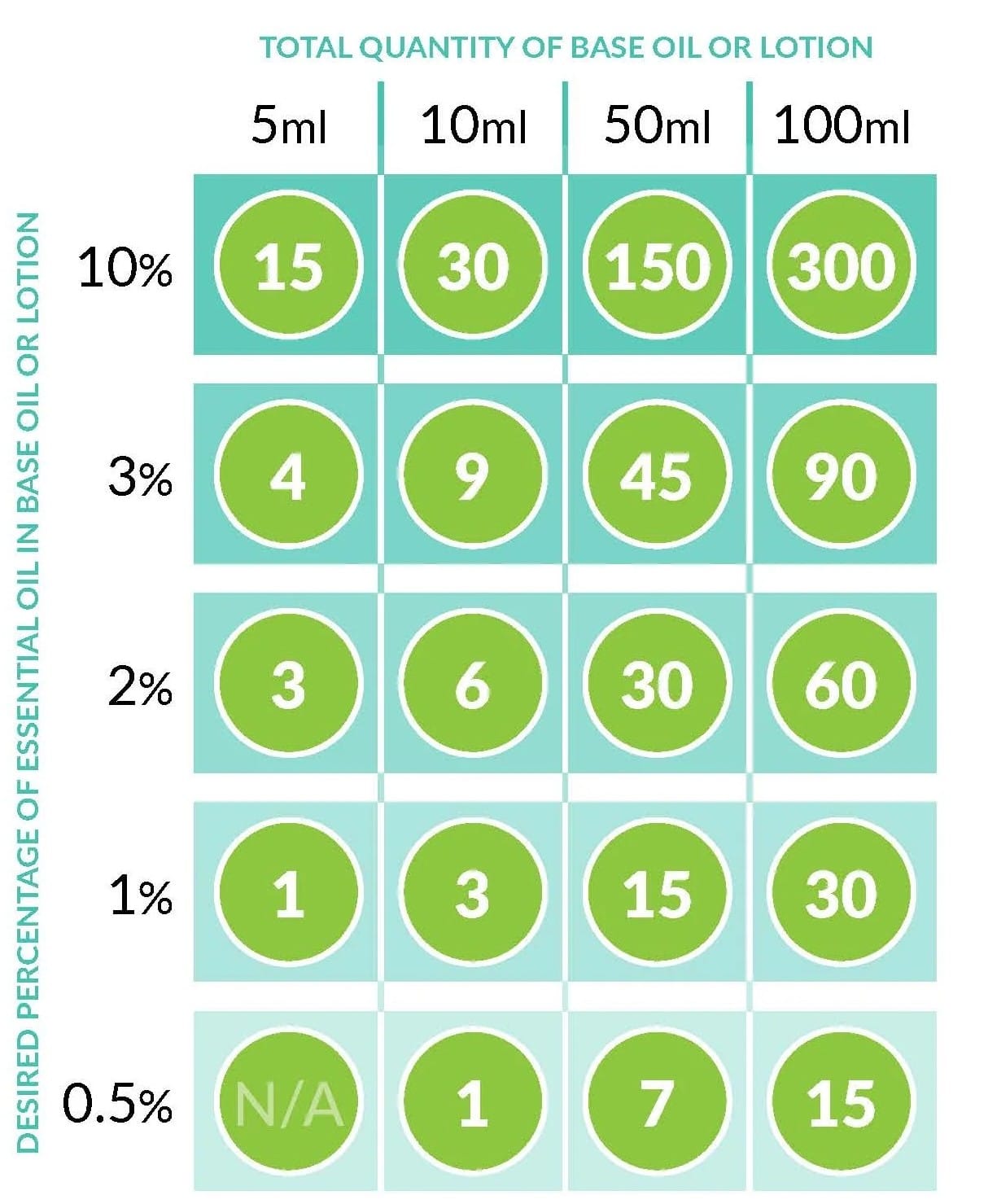
For daily use — moisturisers, wellness body oils, scar treatments — a concentration of 1% is appropriate. This means 3 drops of essential oil per 10ml of carrier oil or cream. For the face, where skin tends to be more sensitive, reduce the concentration to 0.5 to 1%, or 1 to 2 drops per 10ml.
3-5% Concentration: Therapeutic Short-Term Use
For therapeutic use that is not daily — stomach cramps, sprains, flu, allergic reactions, congestion — a concentration of 3% to 5% is generally appropriate. Note that some essential oils have a lower maximum safe usage level regardless of context. Clary sage, cardamom, and clove, for example, should not exceed 1% even in a short-term blend, and are best used alongside other oils rather than as the primary ingredient.
Exception: Lavender & Tea Tree Neat
With the exception of lavender and tea tree, which can be applied neat to insect bites, minor cuts, and burns
Dilution Ratios by Application Method
The right application method ensures your diluted oil works effectively. Use these ratios for each method:
Quick Reference: Most Common Dilutions
- Face oil: 1-2 drops per 10ml
- Body oil: 2-3 drops per 10ml
- Bath: 5-8 drops in emulsifier (milk/honey), then add to water
- Diffuser: 4-6 drops pure oil (no carrier needed)
- Room spray: 6-10 drops per 1 litre water
For all other applications, refer to the table above.
Special Dilution Guidelines for Sensitive Groups
Children Ages 2-12, Pregnant Women, Elderly
Children aged 2 to 12, pregnant women, elderly people, those with weakened immunity, post-surgical patients, and people with chronic illness should use half the standard adult amount. Children aged 12 and over can use the adult standard.
Infants Under 2 Years
Infants under 2 years should use one quarter of the standard adult amount. Consult a qualified aromatherapist before using essential oils on or near infants.
Start Low & Observe
When in doubt, always start at the lower end of the range and observe the response before adjusting.
How to Apply Your Diluted Oil
Once you've diluted your essential oil to the correct concentration, the application method matters as much as the ratio.
- For body or face oils: Apply to clean, slightly damp skin after showering or cleansing. Warm the oil between your palms first to enhance absorption and aroma.
- For baths: Mix your drops with milk, cream, honey, or bath gel first, then add to the water. Never pour undiluted oil directly into bathwater—it will float on the surface and concentrate on the skin.
- For diffusion: Use a waterless diffuser for precise dosing. Water-based diffusers dilute the oil, reducing effectiveness.
- For room spray: Shake well before each use, as essential oils and water naturally separate. Spray around the room (not on fabrics unless you've tested for staining). The method you choose determines how the oil reaches your body—skin absorption, inhalation, or both. Each application method has its own dilution guidelines above.
Safety & When to Consult a Professional
Once absorbed into the bloodstream, essential oils are processed and eliminated by the body's natural metabolism. Used at the correct dilutions, with attention to any specific contraindications for individual oils — particularly for special groups — and never taken internally, aromatherapy is a genuinely safe and well-tolerated natural therapy.
Essential oils are not a substitute for medical diagnosis or treatment. The information in this article is for general wellness guidance. If you are pregnant, caring for an infant, managing a chronic condition, or taking regular medication, please consult your doctor or a qualified aromatherapist before beginning any essential oil practice.