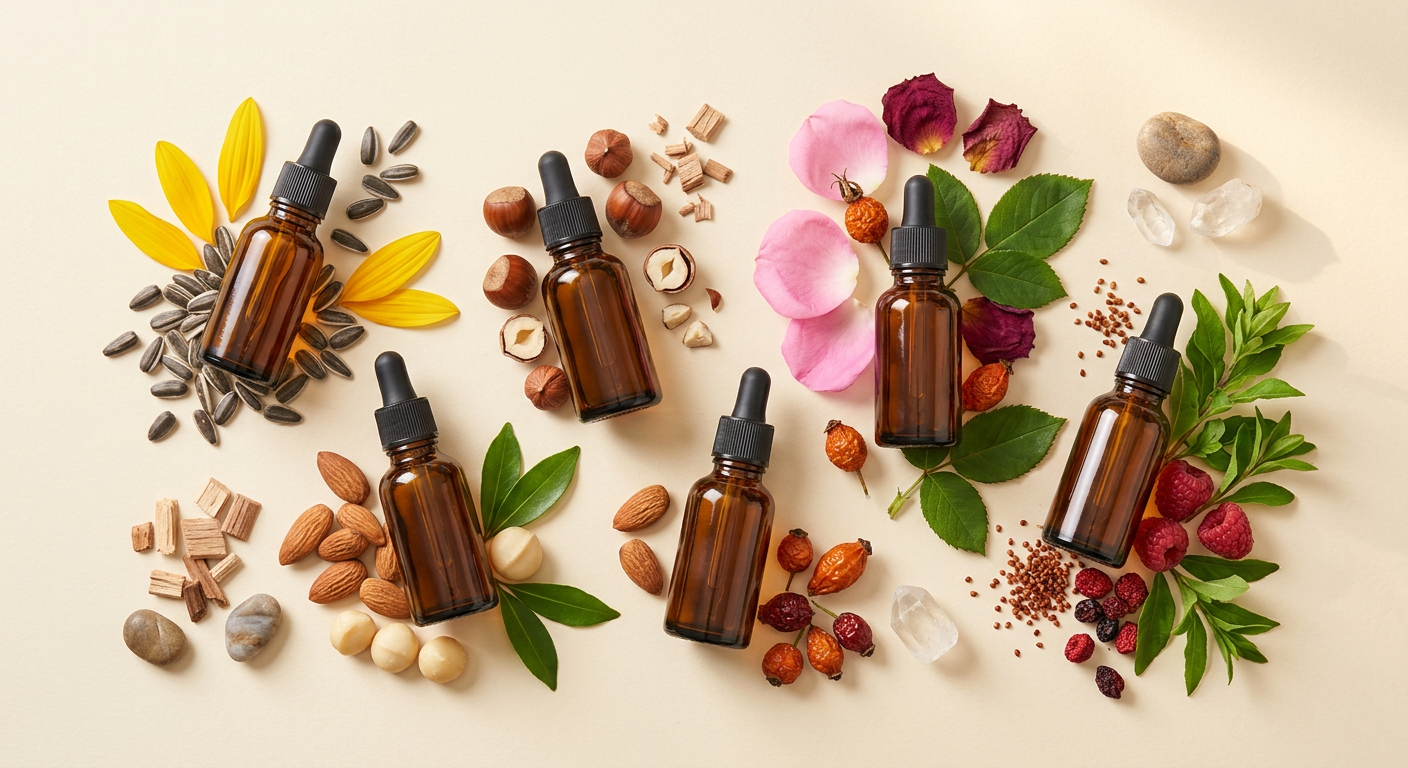
Topical Essential Oils: My Daily Rituals & Blend Recipes
Three bottles. Daily ritual. My exact blend recipes for body oil, evening face oil, and morning face oil—and why ten minutes changed my skin and sleep.

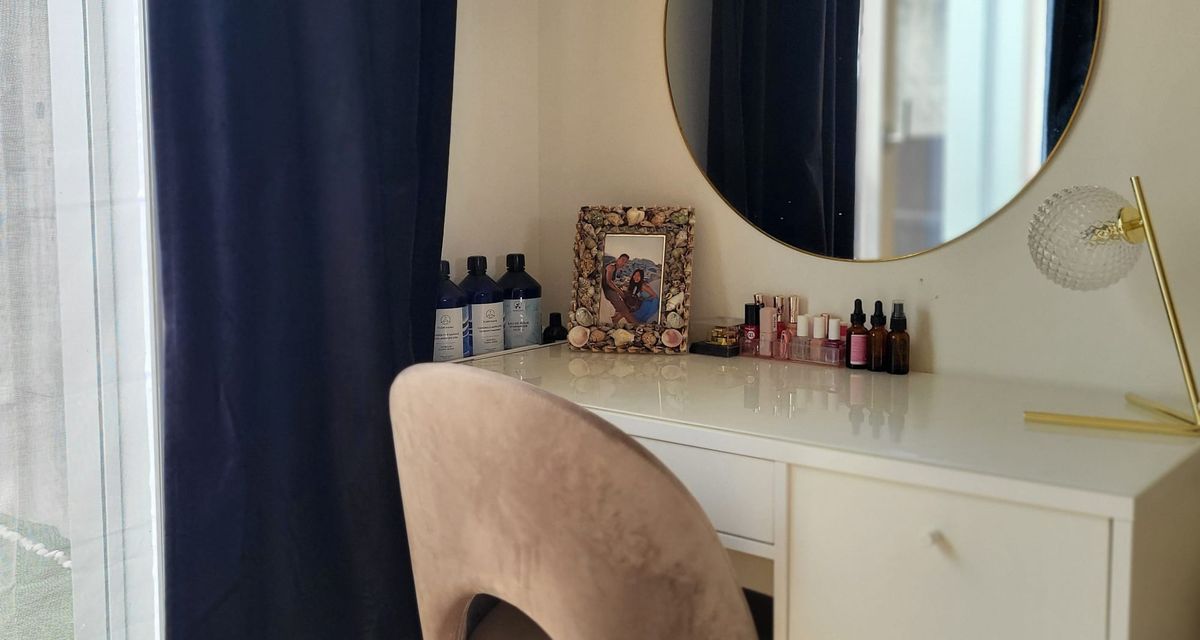
I keep three bottles of oil on my shelf and apply them daily. This is not a productivity hack or a skincare optimization. It is the daily act of returning to myself—the ritual that holds the day together at both ends. Here's exactly what I blend, how I apply it, and why this practice changed my skin and my sleep.
The practical question is: what does this look like in real life?
Previous story
← TCM Aromatherapy: The Complete Guide for Beginners
Why applying the oil to the skin can improve overall health
When you apply a diluted essential oil to the skin, the active constituents are absorbed into the bloodstream within 20 to 30 minutes. The therapeutic effect becomes both local — acting directly on the tissue where you apply it — and systemic, reaching the organs and meridians beneath the surface. You are not only inhaling a scent. You are delivering active compounds to the body through its largest organ.
In Western aromatherapy, essential oils work through pharmacological, physiological, and psychological pathways. The volatile compounds interact with hormones, enzymes, and chemical processes to reduce inflammation or support the body in defeating pathogens. Depending on their chemical constituents, they carry a sedative or uplifting effect — slowing a racing mind or promoting circulation and lymphatic drainage. Through inhalation during application, they are simultaneously absorbed by the limbic system — the part of the brain that governs emotions and memory — shifting how you feel almost immediately.
In TCM the skin is not simply a barrier. It is a living surface mapped by meridian pathways, acupuncture points, and the same energetic logic that governs the whole body. What you put on the skin, where you put it, and how you move it in can access a specific meridian to release what is in excess or replenish what is deficient.
This is the work the three bottles of oil do for me every day.
How I blend my body oil
I blend my own body oil whenever the last bottle runs out — fresh each time, according to what my skin and body need at that moment. I always start with a combination of 3 carrier oils rather than one, because each carrier brings its own properties and the blend has the synergy 1+1>2.
When my skin is very dry: coconut, avocado, and macadamia.
When my skin is sensitive or itchy: calendula — also known as marigold — combined with carrot seed oil and sunflower.
When I want something lighter: sunflower, sweet almond, and jojoba.
I buy the carriers unrefined and cold-pressed, in 200ml bottles, and decant the blend into a 30ml amber bottle for everyday use.
The essential oils change with what I am navigating at the time. In summer I add lavender and frankincense. In winter I reach for sandalwood. In the week before my period I include clary sage. In a stressful week I add neroli. When my muscles are tired after a long day I add sweet marjoram.
The ratio stays within the standard adult dilution — 2 to 3 drops of essential oil per 10ml of carrier oil. For a 30ml bottle I use up to 8 drops in total, mixed fresh every two weeks or so when the last bottle runs low.
Each blend is a complete experience. The relaxation that comes from inhaling the scent as you apply it, the nourishment to the skin, and the therapeutic effect as the active compounds reach the bloodstream — the three happen simultaneously and cannot be separated from each other. This is why no capsule or over-the-counter cream fully replaces this practice.
How I apply it
After a shower, while the skin is still slightly warm. Warm skin absorbs more effectively than cold, and the carrier oil seals the moisture in at the same time.
On days when I feel heavy — bloated, sluggish, or carrying more than usual — I give stronger attention to the lymphatic areas. The armpits are the primary lymph node clusters for the upper body and the breasts. Slow, firm strokes from the breast tissue outward toward the armpit, and from the armpit upward to the collarbone, support lymphatic movement in an area that many women never consciously attend to. Along the inner thigh and lower leg, firm upward strokes encourage the release of excess fluid that accumulates through the day.
This practice improves my sleep. My skin has not needed a separate moisturiser in years. And the five minutes of deliberate attention to my own body has a grounding quality that nothing else quite replicates.
How I blend the face oil — evening
The base for my evening face oil is rosehip and camellia oil in equal measure — 5ml of each, decanted into a small 10ml amber dropper bottle.
Rosehip brings its own high vitamin A and C content, well-researched for skin cell renewal, the gradual fading of dark spots, and the maintenance of elasticity over time. Camellia oil is cold-pressed from the seeds of the same plant that gives us green tea. It is deeply nourishing and restoring. Its oleic acid content makes it one of the most penetrating carriers available, and its polyphenol content adds a layer of antioxidant protection.
To the base I add 1 drop of neroli, 1 drop of palmarosa, and 1 drop of lavender — chosen as much for the quality of sleep they support as for their effect on the skin.
The scent of the evening blend is warm and quietly complex. The rosehip and camellia base carries a faint nuttiness that disappears into the skin within minutes, and above it the neroli and palmarosa open together into something simultaneously floral and green. Neroli is not a sweet floral — it has a hint of bitterness that adds depth and layers to the scent. Palmarosa contributes a soft geranium-like quality — rosy but lighter, with a faint grassy undertone that keeps the blend from becoming heavy. Lavender is fresh and sweet, moderating the whole blend and lifting it into the middle ground. The overall impression is of something refined and gentle.
How I blend the face oil — morning
The morning face oil is built around protection as much as nourishment.
The base is rosehip and raspberry seed oil — 5ml of each in a 10ml amber bottle. Rosehip continues the regenerating work begun the night before. Raspberry seed oil provides natural broad-spectrum UV protection. Its fatty acid profile gives it an estimated SPF of 28 to 50, making it the only carrier oil with meaningful sun protection built in. For an ordinary working day this is sufficient alongside the skin's own melanin response. For a full day in the sun, a dedicated SPF still takes precedence.
To the base I add 1 drop of bergamot FCF and 1 drop of melissa. Together they lift the mood and offer protection from environmental and seasonal allergic triggers.
The morning blend smells like the beginning of something. Bergamot FCF opens first — bright and citrus-green, with the warmth of the Fire element underneath it, recognisably different from lemon or orange. Then melissa arrives, carrying the particular scent of lemon balm — clean and slightly sweet, with a cool edge that bergamot does not have. Together they smell like clarity. Not the sharp, astringent clarity of eucalyptus or peppermint, but the quieter clarity of a morning that has not yet been complicated by anything. The raspberry seed oil adds almost no scent of its own. It is a neutral carrier that lets the bergamot and melissa speak without interference. The blend disappears from the surface of the skin within minutes, but the mood it creates stays considerably longer.
How I apply both face oils
The method is the same morning and evening — only the timing and the intention differ.
After cleansing, on slightly damp skin. A few drops of the blend warmed between the palms first. Then both hands cover the face and press in slowly, following the direction of lymphatic drainage: outward across the cheeks, upward from the jaw, outward from the centre of the forehead.
I do not skip the back of the ears and the back of the neck, especially in the evening when the body is preparing to recover through sleep. In TCM the back of the ears carries several Gallbladder meridian points connected to the nervous system and sleep quality. The back of the neck carries the Wind Gate — 風門 (fēng mén) — a point associated with the release of accumulated tension and the body's vulnerability to cold, wind, and the onset of illness. Pressing gently at the base of the skull for 10 seconds before sleep has a calming effect I would not describe as coincidence.
The ritual that holds everything together
The moment after a shower is one of the most enjoyable of the day. The warmth, the quiet, the particular stillness of a body that has just been cleaned. The aromatic blend opens as the oil warms between my palms. For a few minutes, I stop thinking about the chores, the plans, and the things I did not finish.
When I sit at the dressing table, I look at myself and smile, like patting on my shoulder and telling myself “Well done today! You have done enough. ” Then I set aside anything unfinished and leave it for tomorrow.
It is the closure of my day.
Where to begin if this is new
Start with the face oil. A 10ml bottle of unrefined, cold-pressed rosehip oil and up to 3 drops of essential oils in total.
Lavender if you are uncertain — it suits every season, every skin type, and every mood. Roman chamomile if you want something with an apple-like scent that calms and repairs simultaneously. Neroli if you need to release mental tension and improve the skin's appearance at the same time.
Apply it for one week before sleep. Notice what changes in your skin and in your sleep.
The body oil comes later, when the face oil is established enough to be automatic. One practice, established. Then the next. This is how a daily ritual becomes a lifelong one.
You can even begin without any oils at all. Standing in front of the mirror before sleep and telling yourself that you couldn’t use the day better than it is, and setting aside whatever is unfinished, is a meaningful transition into a new day.
Continue reading
The next article covers the carrier oils used in these blends — which one suits your skin type, how they differ, and what to look for when choosing a quality product.